Supreme Day Matka: Understanding Today’s Market Trends and Patterns
Explore Supreme Day Matka with an informational look at market trends, common number patterns, charts, and result behavior—designed for awareness and understanding.
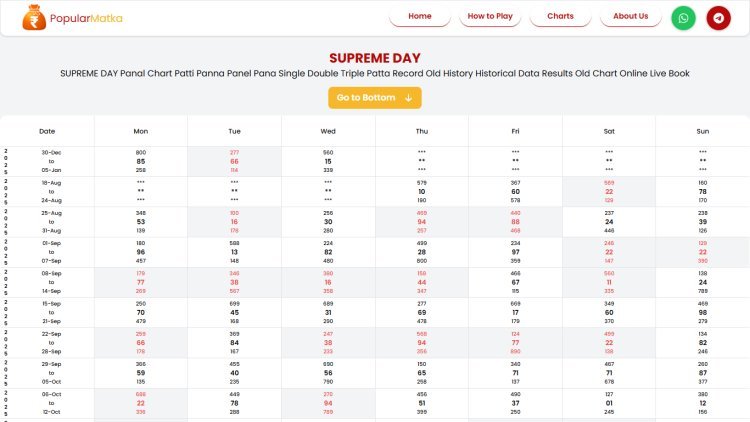
Supreme Day Matka has become a widely discussed topic among matka followers due to its regular result cycle and consistent market presence. While many people track results daily, fewer take the time to understand the overall trends and observable patterns that emerge over time.
This article provides an informational overview of supreme day matka, focusing on how trends and patterns are commonly observed, how charts are read, and why market behavior appears the way it does—without promoting guessing, betting, or prediction methods.
What Is Supreme Day Matka?
Supreme Day Matka is a day-based matka market where results are published at fixed times. Like other matka markets, it follows a numerical format that is recorded daily and displayed in charts for public viewing.
People usually follow Supreme Day Matka for:
-
Daily result updates
-
Chart observation
-
Pattern tracking
-
Historical number reference
Its popularity comes from consistency in timing and availability of past data.
Understanding Matka Market Trends
A market trend in matka generally refers to repeated numerical behavior observed over a period of time. These trends are not guarantees but are patterns noticed when reviewing charts over days, weeks, or months.
Common trend observations include:
-
Frequently repeating single digits
-
Alternating high and low totals
-
Similar number families appearing close together
-
Gaps between repeated figures
Such trends are identified only by reviewing historical data, not by predicting future outcomes.
Role of Charts in Supreme Day Matka
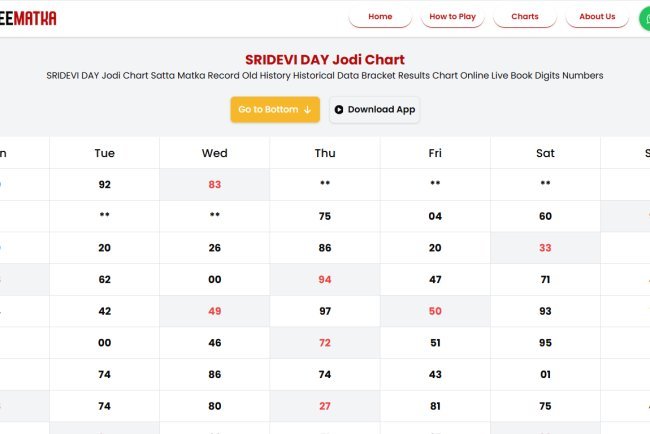
Charts play a central role in understanding Supreme Day Matka trends. These charts display:
-
Daily open and close results
-
Historical sequences
-
Weekly or monthly records
By viewing charts, users can visually identify:
-
Repetition cycles
-
Long gaps in certain numbers
-
Sudden shifts in result patterns
Charts help followers observe behavior, not control or forecast results.
Commonly Observed Number Patterns
Over time, some general pattern types are often discussed among matka followers:
-
Repetition Patterns: The same digit or total appearing multiple times in short intervals
-
Mirror Numbers: Digit pairs that appear reversed (for example, 3 and 8)
-
Cycle Movement: Numbers moving upward or downward over consecutive days
-
Break Patterns: Sudden appearance of long-missing numbers
These patterns are descriptive observations, not reliable indicators of future results.
Why Trends Change Frequently
Supreme Day Matka trends do not remain stable for long periods. Several reasons contribute to this constant change:
-
Daily independent result generation
-
Random number behavior
-
No fixed sequence or formula
-
Natural variation over time
Because of this, trends should be viewed as temporary behaviors, not long-term systems.
Misconceptions About Matka Patterns
A common misconception is that recognizing patterns leads to accurate prediction. In reality:
-
Past results do not control future outcomes
-
Patterns can break without warning
-
Repetition does not imply certainty
Understanding trends should be approached as data observation, not a strategy.
Responsible Viewing and Awareness
It is important to view Supreme Day Matka content responsibly. Charts, trends, and historical data should be used only for:
-
General awareness
-
Educational understanding
-
Record-keeping reference
Avoid relying on patterns for decision-making, and always prioritize responsible behavior.
Conclusion
Supreme Day Matka trends and patterns are best understood through careful observation of historical data and charts. While certain behaviors may appear repeatedly, matka markets remain unpredictable by nature.
By focusing on awareness rather than assumptions, followers can better understand how Supreme Day Matka functions as a market—without falling into the trap of false certainty.
What's Your Reaction?